Evolution, Ecology & Organismal Biology
Scientists studying evolution, ecology, and organismal biology (EEOB) address fundamental questions about the natural world, such as: How did life evolve and what processes govern the generation of the diversity of form, function, and species we see today? How do organisms come to be adapted to their environment? Why do organisms have a particular form or behavior? The fields of EEOB are among the most vibrant in all of the basic sciences. Moreover, principles and methods from EEOB have made important contributions to applied endeavors such as biotechnology, environmental biology, and the health and agricultural sciences.
Read More:
Research Environment
A DIVERSE DEPARTMENT
The Department of Biology has 40 faculty who span the entire scope of modern biology, from cell, molecular, and developmental biology to physiology, ecology, and evolutionary biology. The department is committed to maintaining an intellectually diverse and broad-based community of scientists. Interactions are common among faculty and students, fostering a supportive environment that emphasizes collaboration and resource sharing. About half of the faculty work in evolution, ecology and organismal biology (EEOB). The research interests of EEOB faculty encompass a wide diversity of perspectives, ranging from paleobiology to physiology to evolutionary biology and ecology.
SUPERB UNIVERSITY RESOURCES
The Department of Biology is embedded in a strong university community. This includes a wider group of scientists who are interested in evolution, ecology and organismal biology. For instance, many of the EEOB faculty hold joint appointments in the UNC-CH Department of Marine Sciences and the Ecology Curriculum. The primary mission of the latter group is to offer high quality, customized, interdisciplinary graduate-level training in human and biological ecology. In addition, UNC-CH School of Medicine, which is a 5 minute walk from the Department of Biology, affords opportunities for research in disciplines such as microbiology, neurology, and physiology. Other campus resources include the outstanding North Carolina Botanical Garden, the UNC Herbarium, and the excellent Couch Biology Library, which maintains separate Botany and Zoology Libraries in Coker and Wilson Halls, respectively.
OUTSTANDING SITES FOR FIELD RESEARCH
Although our students conduct their research all over the world, one of our greatest assets is the rich biological diversity and many magnificent natural areas of our state. Consider a few of North Carolina’s natural superlatives:
- The highest mountain summits in eastern America, with eighty-two peaks rising more than 5,000 feet high and the tallest, Mount Mitchell, rising to 6,684 feet.
- Over 320 miles of ocean beaches.
- One of the richest diversities of plant and animal species among the states in temperate latitudes, with about 5,500 plant species and 850 vertebrate species.
The area surrounding UNC-CH provides excellent opportunities for field research. There are four outstanding field research sites/facilities – Mason Farm Biological Reserve, Duke Forest, The Institute for Marine Sciences, and Highlands Biological Station – click below for more:
AN UNEQUALLED SCIENTIFIC COMMUNITY IN THE TRIANGLE
The area surrounding UNC-CH is referred to as the Research Triangle. Three major research universities anchor the three points of the triangle: UNC-CH, Duke University in Durham, and North Carolina State University in Raleigh. All are within a short distance of one another, with Duke a 20 minute drive and NCSU 30 minutes away. The result is heavy traffic among the three universities. For instance, there are groups in behavior, biomechanics, and population biology that meet regularly and provide students and faculty from all three universities a critical, but cordial, atmosphere to discuss their research.
The scientists at the three universities are supplemented by a large number of researchers at corporate and government sites in Research Triangle Park, situated between the three campuses. In addition, graduate students at all three universities frequently enroll in courses at the other campuses. Thus, students at UNC-CH are actually part of a large and interactive community of EEOB researchers.
Training Philosophy
We believe that one of the hallmarks of superior graduate training is a program that allows the student the flexibility to tailor their training to their specific goals and needs rather than being restricted to a set of requirements applied to all students. To ensure that entering students receive the personalized attention and advice that is needed for designing their graduate training program, in particular during the initial years of graduate study, an EEOB faculty member agrees to sponsor each individual student upon admission. Since the majority of our applicants have already identified a research specialty, in most cases the sponsor later becomes the student’s dissertation advisor.
While the advisor serves a crucial advisory role, we also feel that superior graduate training requires that a student be allowed independence in the design and execution of their dissertation research, rather than simply being assigned a project. A successful scientist must master the literature of a field, identify a significant unanswered question, and design and execute a project that provides a definitive answer. We feel that the most effective way to learn these skills is by actual practice in graduate training.
In addition to training in scholarship and research techniques, our students are also trained to present their work in yearly seminars for their fellow Department of Biology graduate students, in smaller EEOB graduate seminars, in local research group meetings with other universities (e.g. in behavior, biomechanics, and population biology) and at a variety of national and international meetings in their research area.
The research interests represented by the EEOB faculty, along with those of the UNC-CH Department of Biology as a whole, cover a remarkable diversity of fields and provide a student with the integrative, multidisciplinary training that characterizes the most important and significant research in the field. Students in the EEOB program are encouraged to take advantage of this range of interests by participating in graduate seminars outside of their specific research area, attending our weekly departmental seminars, and attending seminars in other curricula and departments both on campus and at neighboring universities. Students frequently conduct a portion of their dissertation outside of their advisor’s laboratory.
Degree Requirements
Below are degree requirements for students who enter the Department of Biology as part of the program in Evolution, Ecology, and Organismal Biology (EEOB). Additional requirements are in the Graduate School Handbook and the Guide to Theses and Dissertations. If requirements change after you arrive, you may choose to follow the rules in effect when you arrived, or any subsequent set of rules in effect during your tenure at UNC.
It is your responsibility to stay in touch with your major adviser and graduate dissertation committee. Likewise, you are ultimately responsible for seeing that you comply with the regulations of the Department of Biology and the UNC Graduate School. Failure to comply may result in losing your financial support or in being dismissed from the program. You also need to keep the Graduate Student Services Manager and the Director of Graduate Students informed of committee meetings and qualifying exams as soon as they are scheduled with your committee.
GRADUATE DEGREES OFFERED
The Department of Biology offers a Ph.D. degree. It also offers two masters degrees: a Master of Science degree requiring independent research and a thesis, and a Master of Arts degree requiring a written library report. However, the Master’s degree programs only admit students on an individual basis in the following cases:
1. A request is initiated by a prospective student’s graduate adviser.
2. A current student in the Ph.D. degree program requests to move to a Master’s degree program.
Every graduate student must gain an understanding of the breadth and depth of the field of Biology as it is treated among various traditional disciplines. This is accomplished in three ways. First, each student is required to register for the Biology 891 seminar course in the fall semester for the first two years in the program. Second, the student will complete 3 graduate seminars during the course of their studies in addition to the two semesters of 891. The third way is through a course of study prescribed by each student’s graduate dissertation committee.
For a Master’s degree a minimum of 30 hours of graduate credit is required with at least 18 credits in courses in their field of study. At least three hours of these courses must take the form of research and completion of the thesis (MS, Biology 993) or library report (MA, Biology 992). Out of the 30 hours, 21 must be taken in residence (please see Residence Credit Requirements for more information).
Each Ph.D. student, in addition to taking Biology 891, must register for Biology 994 for a minimum of 6 credit hours (2 semesters) and must continue to register for 994 in subsequent academic semesters (fall/spring) until degree is completed. There are no other course requirements for the Ph.D. except those designated by (1) the student’s preliminary evaluation committee at the Orientation Meeting (see D below), and (2) the student’s graduate dissertation committee at the Oral Comprehensive Exam (see E below).
Most EEOB students select a graduate adviser before beginning graduate school. For students doing rotations in several labs, however, the advisor may not be selected until after rotations are complete. Generally, you must choose an adviser by the end of your first year in graduate school. If you wish to change advisers or add a co-adviser, you must submit your request in writing to the Director of Graduate Studies for approval (these requests must include the reasons for the proposed change). In all cases, at least one adviser must be a faculty member in Biology.
You must form a graduate dissertation committee to oversee and guide your research by the end of your third semester, and preferably by the beginning of that semester. This process is normally done in consultation with your adviser. Once each individual has agreed to serve on your committee, you should submit this list of the proposed members to the Director of Graduate Studies (via the Graduate Student Services Manager) for approval.
For Ph.D. students, the committee must have at least five members, and for Masters students, the committee must consist of at least three members. A majority must be regular members of the UNC Biology graduate faculty (i.e. the Professors, Associate Professors, and Assistant Professors of Biology, as well as a few additional UNC faculty who have been specially appointed by the Department; if you are unsure of the status of a prospective committee member, then consult the Graduate Student Services Manager). After satisfying this majority requirement, additional committee members can include anyone who is qualified to conduct the doctoral examinations and advise the student on their dissertation research. People who are active UNC faculty require no special approval. People who are not active UNC faculty may serve as committee members, subject to approval first by the Director of Graduate Studies, then by the Dean of the Graduate School, who is responsible for the final appointment of the committee. To request approval, submit the proposed committee member’s curriculum vitae to the Director of Graduate Studies.
At the start of the first meeting of the committee, one member is designated as chair. Selection of the chair shall be a collaborative choice between the student, the advisor, and the other members of the committee. The chair must be a regular member of the UNC Biology graduate faculty. The chair must not be the student’s research advisor, co-advisor, or spouse of the (co)advisor. The chair will lead the meetings of the advisory
committee. At the conclusion of each committee meeting, the chair will synthesize all committee members’ views on the student’s performance and progress into a summary statement and verbally communicate the summary to the student. As required by the UNC Graduate School, the chair will be responsible for completion of the Doctoral Exam Report Form. These are the sole and entire responsibilities of the chair. Of the countless responsibilities that do not fall on the chair, only three will be listed here. First, serving as chair does not convey greater responsibility for scientific oversight of the student’s dissertation research; this is the responsibility of the research advisor. Second, aside from conducting committee meetings in a professional manner, serving as chair does not convey greater responsibility for mediating any interpersonal conflict. Third, the chair is not responsible for establishing the time and place of committee meetings, or ensuring that committee meetings are held at required intervals; these are the responsibility of the student.
It is recognized that research projects may go in unanticipated directions as they develop. Therefore, it is permissible to make changes to the committee, including adding additional members or making substitutions. If you wish to change the membership of your committee, then submit a written request to the Director of Graduate Studies (this request must include the reasons for the proposed change). Changes must be approved in advance by the Director of Graduate Studies, and then reported to the UNC Graduate School (via a revised Report of Doctoral Committee Composition form, to be obtained from the Graduate Student Services Manager), the chair of the committee, and affected committee members.
Ph.D. students must take a comprehensive oral examination by no later than the end of their second year. The oral exam is the primary examination of general knowledge and should be separated in time from the dissertation feasibility meeting (see G below). Students must be registered for their advisor’s 994 section in the semester when the exam is taken.
To encourage breadth, you are required, in consultation with your committee, to identify four areas of proficiency from at least two major categories (Table 2). The selected areas will serve as a focus for preparation and questioning. The proficiency topics should be approved by the committee prior to the oral exam. Ideally, proficiencies should be identified far enough in advance that any deficiencies can be addressed through coursework, directed reading, or other forms of preparation. The four areas should each represent a topic that is broad enough to be the subject of an undergraduate course; during the exam, you are expected to demonstrate a level of proficiency in each area that would indicate that you could teach such a course.
In order to pass the exam, a majority of your committee must pass you (your committee may also pass you, but require courses to take or other actions to make up any deficiencies). If you fail the exam once, you will be allowed to retake the exam. However, you may also wish to consider petitioning to switch to the Master’s Degree program. Students who fail a second time will be dismissed from the program and the UNC Graduate School.
Table 2. Oral Exam Categories and Example Proficiencies
Possible Areas of Proficiency*:
Behavior
Biomechanics
Development
Morphology
Neurobiology
Physiology
Taxonomic specialty
Possible Areas of Proficiency*:
Behavioral ecology
Community ecology
Conservation biology
Ecosystem function
Evolutionary mechanisms
Evolution and development
Macroevolution
Phylogenetics
Population ecology
Possible Areas of Proficiency*:
Cell biology
Developmental biology
Genetics
Molecular biology
(at the discretion of your committee; see note below)
Possible Areas of Proficiency*:
Biometry & Statistics
Computational & Quantitative biology
Oceanography
Paleobiology
*Each area selected should represent a topic that is broad enough to be the subject of an undergraduate course.
‡Students who select an area in category 4 are required to select areas of proficiency from at least two of the remaining three categories.
See your advisor for more suggestions
A comprehensive written examination will be required for Master’s students that have not yet passed an oral comprehensive exam. For this exam, each member of the graduate dissertation committee will submit to the committee chair one or more questions designed to be answered within a two-hour period. The full examination must be undertaken and completed within a two-day period. Each question will be graded by at least two members of the committee. Passing of the exam is contingent upon approval of two-thirds of the entire committee. This exam cannot be taken until all courses are complete or until the final courses are in progress. Students must be registered for their advisor’s 992 (MA) or 993 (MS) section in the semester when the exam is taken.
Ph.D. students are required to prepare a research proposal to satisfy their written exam requirement by the end of their third year. (Note: While not required, in most cases, students should use the same proposal to satisfy the requirements of both the written exam and the feasibility meeting, which is described below.) The proposal must include a project summary (limited to one single-spaced page), and a detailed project description (which must be no less than eight and no more than twelve single spaced pages, including figures and tables, but excluding the list of references cited). A majority of your committee must approve the proposal in order for you to pass the exam. If you fail, you will be allowed to retake the exam by revising your proposal or submitting a different one. You may also petition to switch to the Master’s Degree program. Students who fail a second time will be dismissed from the program and the UNC Graduate School. Students must be registered for their advisor’s 994 section in the semester when the exam is taken.
By the end of their third year, Ph.D. students must hold a feasibility meeting to defend their dissertation research plan (Note: in most cases, students should hold their feasibility meeting immediately upon completion of the research proposal that satisfies their written exam requirement; see F above). The research plan must describe all the research that the student envisions for her/his/their dissertation. If the research plan also describes any non- dissertation research (e.g. “side projects”), then that must be clearly distinguished from the dissertation work. The feasibility meeting should consist of an in-depth discussion and correction of the research plan. You should provide your committee with a copy of your research plan at least one week in advance of the feasibility meeting. At the meeting, you should present a formal presentation of your research plan, followed by a lengthy discussion with your committee of the research plan. You are strongly encouraged to schedule your feasibility meeting such that the formal presentation portion of the meeting can take place during the regularly scheduled “Lunch Bunch” seminar series. At the conclusion of the feasibility meeting, your committee will decide (by majority vote) whether or not to pass you and thereby recommend that you be admitted to candidacy.
To be admitted to candidacy, you must pass the oral comprehensive examination (see E above), written examination (see F above), AND feasibility meeting (see G above). Admission to candidacy is a requirement for certain awards and fellowships, so it is a good idea to achieve candidacy as soon is feasible.
You must meet annually with your graduate dissertation committee. The purpose of these meetings will be for you to inform the committee of progress toward the completion of your degree since the last committee meeting. A majority of the committee must be present for each meeting. Before the meeting, you must provide each committee member with a 2-3 page written progress report (these progress reports may include data collected since the last meeting, papers submitted, meetings attended, grants received, etc.). Following the meeting, the Annual Committee Report Form (please see the “Forms” section) must be signed by all committee members who approve of your progress and turned in to the Manager of Graduate Student Services. If the majority of your committee does not sign the form you will be deemed to have not made adequate progress, and the situation will be brought to the attention of the Director of Graduate Studies. Exceptions to these requirements can only be granted by the Director of Graduate Studies.
Before scheduling your final thesis defense, you must provide your graduate dissertation committee with a synopsis or outline of your thesis and meet with your committee. You will not be allowed to schedule a final thesis defense until the majority of your committee agrees that you are ready to defend. Once your committee agrees to this, please have your committee sign the Pre-Defense Committee Meeting form (please see the “Forms” section) and return to the Manager of Graduate Student Services.
In the semester of graduation, a student who has prepared an M.S. thesis, M.A. report, or Ph.D. dissertation will present a final defense, which is an oral exam consisting of a public seminar on the research, followed by a discussion of the work and their thesis/dissertation with the student’s graduate dissertation committee. The completed thesis or dissertation should be sent to the committee at least two weeks in advance of the scheduled defense. All committee members are expected to attend the defense (either in person or by remote participation). For both Master’s and Ph.D. students passing of the final exam and approval of the thesis is by an absolute majority vote of all members of the Advisory Committee. The dissertation advisor is responsible for verifying that changes to the thesis/dissertation suggested by the committee have been made and then the committee chair can sign off on the approval form. After final approval (and ensuring the formatting matches the Graduate School guidelines), the thesis/dissertation must be submitted to the Graduate School for final processing.
Students must be registered during the semesters in which exams are taken. Residence credit of two full semesters is required for a master’s degree and four full semesters is required for a Ph.D. degree. Please see Residence Credit Requirements for more information.
The Department believes strongly in the value of teaching, and therefore requires each student to serve as a teaching assistant (TA) in a course in the Biology Department for at least one Fall or Spring semester.
In addition to coursework, attending seminars also greatly helps students gain exposure to broader research and new ways to ask and answer scientific questions. It is strongly recommended that students attend the lunch bunch seminars on Fridays and attend relevant biology departmental seminars.
To maintain eligibility to continue in The Graduate School, a student must not receive a grade of F or F*, or receive a grade of L in nine or more credit hours.
The degree time limit for Master’s students is 5 years from the date of registration, and for a Ph.D. student 8 years.
Refer to the Graduate School Handbook for additional information regarding required registration, masters and doctoral degree requirements, and other relevant information. Please inform the Manager of Graduate Student Services of when any of the above exams and meetings are to take place as forms may need to be prepared.
Faculty and students are strongly encouraged to follow these recommended deadlines. If a student is in danger of falling behind these deadlines, then the student must petition the Director of Graduate Studies for a deferral (which may or may not be granted). Any such petition must be submitted in writing (including email) in the first two weeks of the semester indicated in the timeline. Students who are behind the deadline (including annual committee meetings) will be lower in priority for TA-ships (relative to students in the Biology graduate program who have met the required timeline, but not relative to other students, e.g. those from outside Biology).
| ACTIVITY | DEADLINE |
|---|---|
| Orientation | Beginning of 1st semester |
| Register for BIOL 891 | First two fall semesters |
| Form graduate committee | Before end of 3rd semester (fall semester of 2nd year) |
| Oral comprehensive exam | Before end of 2nd year |
| Written exam | Before end of 3rd year |
| Feasibility meeting | Before end of 3rd year |
| Annual committee meeting | Once a year after qualifying exams are completed |
| Pre-Defense committee meeting | Before scheduling defense (~ 1 semester before defense) |
| Defense of Dissertation | Recommended by end of 5th year |
| ACTIVITY | DEADLINE |
|---|---|
| Orientation Meeting | Beginning of 1st semester |
| Register for BIOL 891 | First two fall semesters |
| Form Graduate Committee | Before end of 1st summer (before start of 2nd year) |
| Written Exam* | Before end of 2nd year |
| Thesis Defense | Recommended by end of 2nd year |
| Graduation | Upon successful completion of thesis defense |
*30 course credit hours must be completed or in the process of completion at the time the written exam is taken. This could mean your written exam and thesis defense are in the same semester, or in your final semester you will only be registered for 993.
Financial Support
OVERVIEW OF FUNDING OPPORTUNITIES
As a student in the Evolution, Ecology and Organismal Biology (EEOB) program at UNC you will be provided a guaranteed 9-month stipend of $22,000 and support throughout your graduate career as long as you remain in good academic standing. Through a combination of funding during the academic year as well as the summer, we will strive to provide you with a minimum annual stipend of $30,000. This minimum will be reviewed yearly to consider increases based on the MIT living wage calculator, representative apartment rents, and input from Biology graduate students. Several sources of stipend support are available.
EEOB students are supported by teaching assistantships, research assistantships, or fellowships (described in greater detail below) during the academic year and summer. It is very important that funding packages are discussed in detail during the recruitment process between the prospective advisor and student, and that realistic expectations of funding are shared.
Academic Year Funding:
During the 9-month academic year, you will be funded on either a teaching assistantship, research assistantship, or fellowship. Fellowships usually fund students on a 9-month or annual basis and vary in stipend amounts. Assistantships provide a minimum stipend of $11,000 per semester ($22,000 for the 9-month academic year). If your advisor does not have sufficient grant funding to fund you as a research assistant, then teaching assistantships will be available to you.
Summer Funding:
Our graduate students are funded during the summer and the goal is that they are funded on their advisor’s grants as research assistants. If the advisor does not have grant funding, teaching assistantships are available during both summer sessions. Each session lasts 5 weeks with a 20 hour per week average for teaching one lab or one recitation. Compensation for teaching one lab is $4000 and for teaching one recitation is $3650. We strive to provide our students with sufficient lab or recitation sections to reach $26,000 (two labs, two recitations, or a combination of the two). However, it is greatly encouraged that advisors provide grant funding to bridge any potential gap between summer teaching availability and $26,000.
SPECIFIC FUNDING OPPORTUNITIES
TAs help teach undergraduate courses and lead recitations and laboratories. A TA in Biology currently pays $11,000 per semester for a 9-month stipend of $22,000 (plus health insurance, tuition coverage, and student fees). The expected average workload for a TA during the academic semester is 20 hours per week or less.
There are orientation/training sessions sponsored by the Center for Faculty Excellence (CFE) for all new TAs. TAs must also attend a one-hour OSHA session offered by the Biology Department. TAs are evaluated by the course instructor(s) and students enrolled in the course. TAs are expected to receive satisfactory evaluations.
If funding permits, your advisor may be able to support you as a research assistant funded off of their grant. Duties vary, but it is generally expected that RAs will work 15-20 hours per week on grant-related work and be paid at a level comparable to a TA. Consult your advisor for details.
Fellowships are often the most desirable form of funding because they typically carry no service requirements. There are two main kinds of fellowships for beginning students. First are those offered by the UNC graduate school (for information, see the funding information page on the UNC graduate school website). Second, are those offered by external funding agencies, such as the National Science Foundation Graduate Research Fellowship Program. The Graduate Funding Information Center is a resource that assists current and prospective graduate students in finding appropriate funding sources. Through some of the funding databases, you can set up alerts to notify you when new opportunities are available based on information you provide.
A limited number of fellowships are also available to support continuing students. These fellowships are described in greater detail below. The UNC Graduate School holds an annual competition for a limited number of fellowships aimed at supporting advanced students (i.e., those who have been admitted to candidacy). Most are merit-based. For example, the Graduate School conducts competitions for one-semester Off-Campus Research Dissertation Fellowships and one-year Doctoral Dissertation Completion Fellowships.
For a complete listing of fellowships offered, visit the UNC Graduate School website.
As the departmental budget permits, several awards are offered annually through the Biology Department to help graduate students with research expenses (generally a few hundred dollars per year). The competition for these awards is normally announced in April.
In addition, the UNC Graduate School awards transportation grants. These grants cover travel expenses only and are available for doctoral and masters students presenting research papers at international, national, regional academic conferences or meetings of professional societies. Students may receive this grant only once. Applications are considered throughout the year and must be submitted prior to travel.
For more information, visit the UNC Graduate School website.
PAYROLL AND BENEFITS INFORMATION
Teaching Assistants and Research Assistants are paid monthly for the academic year, usually beginning at the end of August and continuing through mid-May. Those who will be supported as Research Assistants during the summer will continue to be paid monthly, while those who will be supported as Teaching Assistants during the summer are paid at the end of each summer session. Students on University payroll are required to have their paychecks automatically deposited to their bank account by completing a direct deposit authorization form via ConnectCarolina. Students on Graduate School fellowships are generally paid in lump sums at the beginning of the semesters (and/or summer).
As part of your assistantship or fellowship, you will receive an award to cover your full tuition and mandatory student fees. Health insurance is also provided and your monthly premium is covered by your stipend’s funding source. Please see our Graduate Student Resources page for more information on graduate student health insurance. You must remain fully enrolled and maintain good academic standing to qualify for your assistantship and the benefits outlined above.
How to Apply
Interested in applying to the Biology Graduate Program? The Científico Latino Project provides wonderful resources to assist you when applying to graduate school in STEM.
Students interested in Evolution, Ecology, and Organismal Biology (EEOB) should apply directly to the Biology department using the guidelines below. Note that you should contact one or more faculty you are interested in working with prior to applying as admissions to this program is contingent on faculty interest.
Students interested in Molecular, Cell, and Developmental Biology (MCDB) must apply through the BBSP (refer to the MCDB application page for information).
Students interested in the interface of EEOB and MCDB should contact one or more prospective faculty advisors for guidance on how to apply.
The deadline for applications for Fall 2024 admissions is November 28, 2023. Applications cannot be accepted after this date. Once applications are received, we evaluate them to determine who we will invite to visit our campus and interview.
You must apply online through the UNC graduate college: https://applynow.unc.edu/apply/.
The online application must be completed in its entirety and the application fee of $95 paid before the application is considered complete.
Applications that are not complete by the deadline will not be reviewed. The following items are needed in the application:
- All materials required by the graduate college (available at http://gradschool.unc.edu/admissions/instructions.html)
- A listing of one or more faculty with whom you wish to conduct research
- A listing of the research area(s) in which you wish to work (via the Area of Interest/Specialization drop-down box within the application)
- The Graduate College’s required “Statement of Purpose” must consist of an essay (1-3 pages) describing research interests, proposed approaches, and career goals
- In addition to the required Statement of Purpose, provide an essay (1-3 pages) describing prior research experience and its relationship to research interests and career goals. This should be uploaded as a Supplemental Document
The GREs are not required for applications to our program but can be included if the applicant desires. Potential reasons for inclusion could be that the student feels they improve their application or their potential faculty advisor at UNC recommends including them. If you include GRE scores, they will be considered as part of a comprehensive review of your complete application (including classwork, research, letters of recommendation, statement of purpose, and prior research experience). Graduate school guidelines are that GRE scores must be no more than 5 years old.
Your application is reviewed by the departmental admissions committee. In January, we decide what applicants will be invited in for on-campus interviews. On occasion, applicants may also be “wait listed” at this point; they may be invited in for an interview later pending decisions made after earlier campus interviews take place. In March and April, final decisions are made and applicants are notified.
Note that applicants are admitted ONLY if a faculty member is willing to advise that student. You must therefore identify prospective advisors prior to submitting an application and indicate this on your application.
You can monitor you application through the online application system.
We consider applications in a comprehensive process and weaknesses in one part of the application can be compensated by demonstrated strengths on other aspects across classwork, research, letters of recommendation, statement of purpose, and prior research experience. These are the graduate school guidelines:
- GRE scores no more than 5 years old (Note: GRE scores are optional)
- TOEFL, required of all international students (except those from countries where English is the official language, or those who have received a degree from a US university) and cannot be over 2 years old. The Graduate School minimum acceptable score is 90 (internet-based TOEFL exam) or 7 (IELTS exam)
- GPA minimum of 3.0
For department information:
Kenlyn Merritt
Biology Graduate Admissions
CB# 3280, 202 Coker Hall
University of North Carolina
Chapel Hill, NC 27599-3280
E-mail: kenlyn@email.unc.edu
For online application for admission:
Graduate School
CB# 4010, Bynum Hall
University of North Carolina
Chapel Hill, NC 27599-4010<
Graduate Program Committees
EEOB Graduate Studies Committee Members:
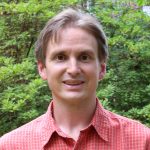





Willett, Christopher S.
Research Associate ProfessorDirector of Graduate Studies
willett4@email.unc.edu

EEOB Graduate Admissions Committee Members:
Willett, Christopher S.
Research Associate ProfessorDirector of Graduate Studies
willett4@email.unc.edu
Find faculty doing research in:
NEUROBIOLOGY & BEHAVIOR
ECOLOGY
EVOLUTION
ORGANISMAL
PLANT BIOLOGY
QUANTITATIVE BIOLOGY
Quick Links:
- Program in Evolution, Ecology, & Organismal Biology
- Program in Molecular, Cell, & Developmental Biology
- Quantitative Biology Graduate Track
- How to Apply
- 2024 Graduate Student Appreciation Week Highlights